Metallisa Font: A Designer’s Guide to Modern Script Logos
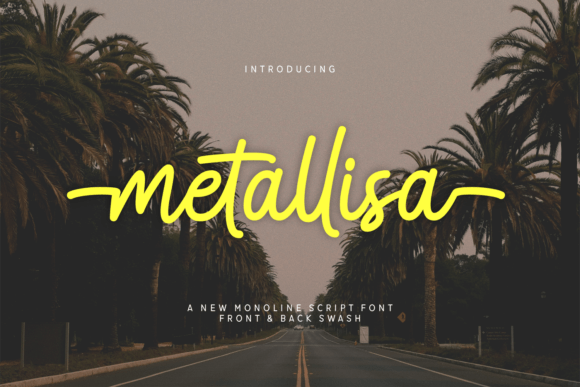
I remember staring at a blank artboard last Tuesday, coffee cooling beside my mouse, trying to crack the visual identity for a new artisanal skincare line. The client wanted something that felt handmade but not messy, elegant but approachable. I scrolled through my library of Script Handwritten Fonts, skipping over the overly ornate calligraphy styles that felt too traditional and the rough brush scripts that lacked precision. Then I loaded up Metallisa. It was exactly the bridge between structure and flow I needed. As a striking monoline script font with smooth, flowing strokes and unique front and back swashes, it immediately added an extra layer of personality to the draft. Its clean and dynamic design makes it ideal for logo work where clarity is just as important as style.
Why Metallisa Works for Clean Logo Design
When you are building a brand identity from scratch, the logo is the anchor. Many designers hesitate to use script fonts for primary logos because they can be hard to read at small sizes or lose their charm when scaled down. Metallisa solves this by maintaining a consistent stroke width. Because it is a monoline typeface, it doesn’t rely on thick-and-thin contrast that might disappear on a mobile screen or a tiny product label. In my recent project, I placed the brand name in Metallisa at the center of the layout. The smooth, flowing strokes created a sense of movement without sacrificing legibility. The unique front and back swashes acted as natural frames, enclosing the wordmark and giving it a contained, badge-like feel without needing additional graphic elements. This clean and dynamic design makes it ideal for logo applications where you want the typography to stand alone as the hero.
What I appreciate most about using Metallisa in professional branding is its versatility. It doesn’t scream "look at me" with excessive decoration; instead, it whispers sophistication. For a boutique or a creative studio, this subtlety is key. It allows the brand to feel established and trustworthy while still retaining that human, handwritten touch. When testing it against other Script Handwritten Fonts, I found that Metallisa held its shape better across different backgrounds, whether it was stamped in gold foil on dark packaging or printed in black on a white business card.
Pairing Metallisa with Sans Serif and Serif Fonts
A common mistake in typography is pairing a complex script with another decorative font. Since Metallisa already brings a lot of personality with its unique swashes, it needs a quiet partner. In my workflow, I almost always pair it with a geometric sans serif or a neutral serif font to create balance. For the skincare brand, I chose a lightweight, modern sans serif for the taglines and ingredient lists. This contrast highlighted the organic curves of Metallisa while ensuring the supporting text remained highly readable. The monoline nature of the script means it doesn’t compete visually with heavier weights; instead, it complements them.
If you are working on editorial design or a website header, try pairing Metallisa with a classic serif font. The juxtaposition of the traditional serif structures against the fluid, contemporary lines of the script creates a trendy, high-end aesthetic. This combination works beautifully for fashion labels, wedding invitations, or lifestyle blogs. The key is to let Metallisa handle the emotional heavy lifting—the headers, the names, the focal points—while the secondary fonts handle the information density. This hierarchy ensures that your design assets remain clean and professional, avoiding the cluttered look that often plagues amateur layouts.
Using Metallisa for Packaging and Product Labels
Packaging design is where typography meets physical reality. I love testing Metallisa on mockups because its smooth strokes translate incredibly well to various printing techniques. Whether you are designing for a local restaurant’s menu, a handmade shop’s sticker labels, or a premium product box, the consistency of the font ensures it looks crisp. I recently applied it to a circular label design. The back swash of the final letter curled perfectly under the baseline, creating a natural underline that guided the eye across the design. This kind of intentional detail saves time because you don’t need to add artificial lines or shapes to balance the composition.
For small business owners and entrepreneurs creating their own marketing materials, Metallisa is a forgiving choice. It doesn’t require extensive kerning adjustments to look good. The spacing feels natural right out of the box. When used on social media graphics, such as Instagram quotes or story highlights, the font retains its elegance even when compressed into square formats. Its dynamic design captures attention in a feed full of static images, making it a powerful tool for digital engagement. Because it is a premium font with a distinct character, it helps elevate perceived value, making a small batch product feel like a luxury item.
Practical Tips for Installing and Licensing Metallisa
Before you commit to using Metallisa in a client project, always check the licensing terms. As a professional designer, I ensure that any Script Handwritten Fonts I purchase have the appropriate commercial license for the intended use, whether that’s web embedding, print advertising, or merchandise. Metallisa typically comes in standard font formats like OTF or TTF, which are compatible with all major design software including Adobe Illustrator, Photoshop, and InDesign. I recommend installing the font and typing out the full alphabet to check for any specific ligatures or alternates that might enhance your design. While Metallisa is known for its clean monoline style, exploring these small details can add custom flair to your logos.
Testing is crucial. I always create a "stress test" document where I view the font at very large sizes (for signage) and very small sizes (for favicons or footers). Metallisa performs remarkably well in both extremes due to its open counters and clear letterforms. If you are using it for a website header, ensure you have web-font permissions if required. For print, vectorizing the text in Illustrator before sending it to the printer ensures those smooth, flowing strokes remain sharp and free of pixelation. This attention to technical detail ensures that the personality you fell in love with on screen translates perfectly to the final physical or digital product.
In the end, choosing the right typeface is about finding a voice for the brand. Metallisa offers a voice that is confident, modern, and warmly inviting. It bridges the gap between the rigid world of corporate branding and the expressive world of hand-lettering. Whether you are designing a logo for a new startup, refreshing an existing brand identity, or creating beautiful social media templates, this font provides the flexibility and style needed to make a lasting impression. It is more than just a set of characters; it is a design tool that simplifies the creation of sophisticated, memorable visual identities.